









Is Seismic working for your sales teams?
Seismic was built for content ops teams — not for the reps who have to sell with it. Now, with a Highspot merger underway, roadmap decisions and account teams are in flux. Don’t let a merger integration decide what your team walks into meetings with. Showpad is the field-first alternative — already trusted by 2,000+ global organizations.
2,000+ global companies rely on Showpad.








Why companies choose Showpad





“Two major behavioral changes we saw in our sales teams after Showpad? Greater confidence and stronger curiosity to explore and engage customers.”
A partner that’s here for the long run
For nearly 15 years, Showpad has invested in its customers, products, and people. Every Showpad customer — regardless of spend — gets a dedicated relationship manager, 99.1% response SLA, and a team of enablement advisors aligned to your maturity journey. Seismic demos well. But customer reviews and analyst reports flag a different post-sale reality — missed commitments, long response times, and admins left to figure it out alone. When evaluating platforms, ask both vendors the same question: Ask any vendor before you sign: “Who is accountable for my success?”




Built for the field — not just the desktop
Reps sell in showrooms, on plant floors, in surgical suites, and in cars between meetings. Showpad’s mobile-first, offline-first architecture was built for how field teams actually work — one platform, one login, full functionality on any device with or without a signal. Seismic’s desktop-centric UX wasn’t built for this, and G2 reviewers agree.
Where Seismic falls short (G2 reviews)
- Complex UX that slows down rep adoption
- Mobile experience lags behind the desktop version
- Reps switch between separate content and coaching interfaces
Give buyers a place to stay engaged — not just a link they click once
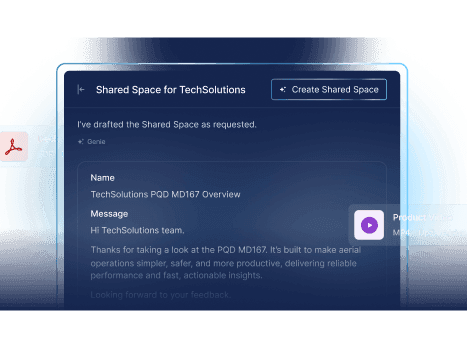
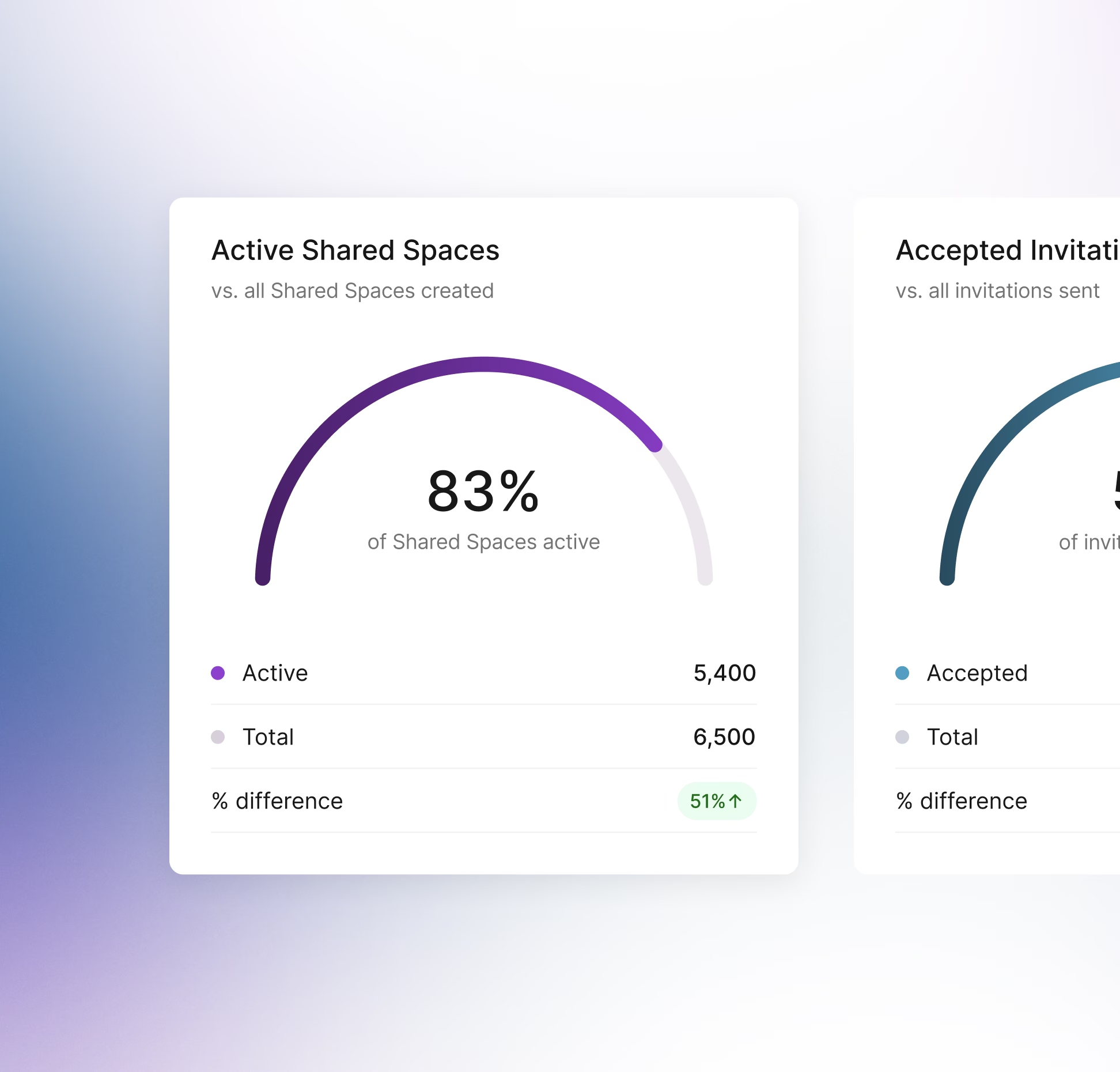
Buyers today don’t stop researching after a rep sends them a PDF. Showpad’s Shared Spaces give every deal a persistent, personalized workspace where buyers, sellers, and stakeholders exchange content, messages, and feedback across the full cycle. Seismic’s LiveSend tracks when a buyer opens a link — it doesn’t give them somewhere to keep working.
Where Seismic falls short (G2 reviews)
- One-sided content delivery with tracking, not collaboration
- Limited two-way communication tools between reps and buyers
- Engagement data ends at the open — no live signal from the buyer’s team
Coaching and content, built into one platform
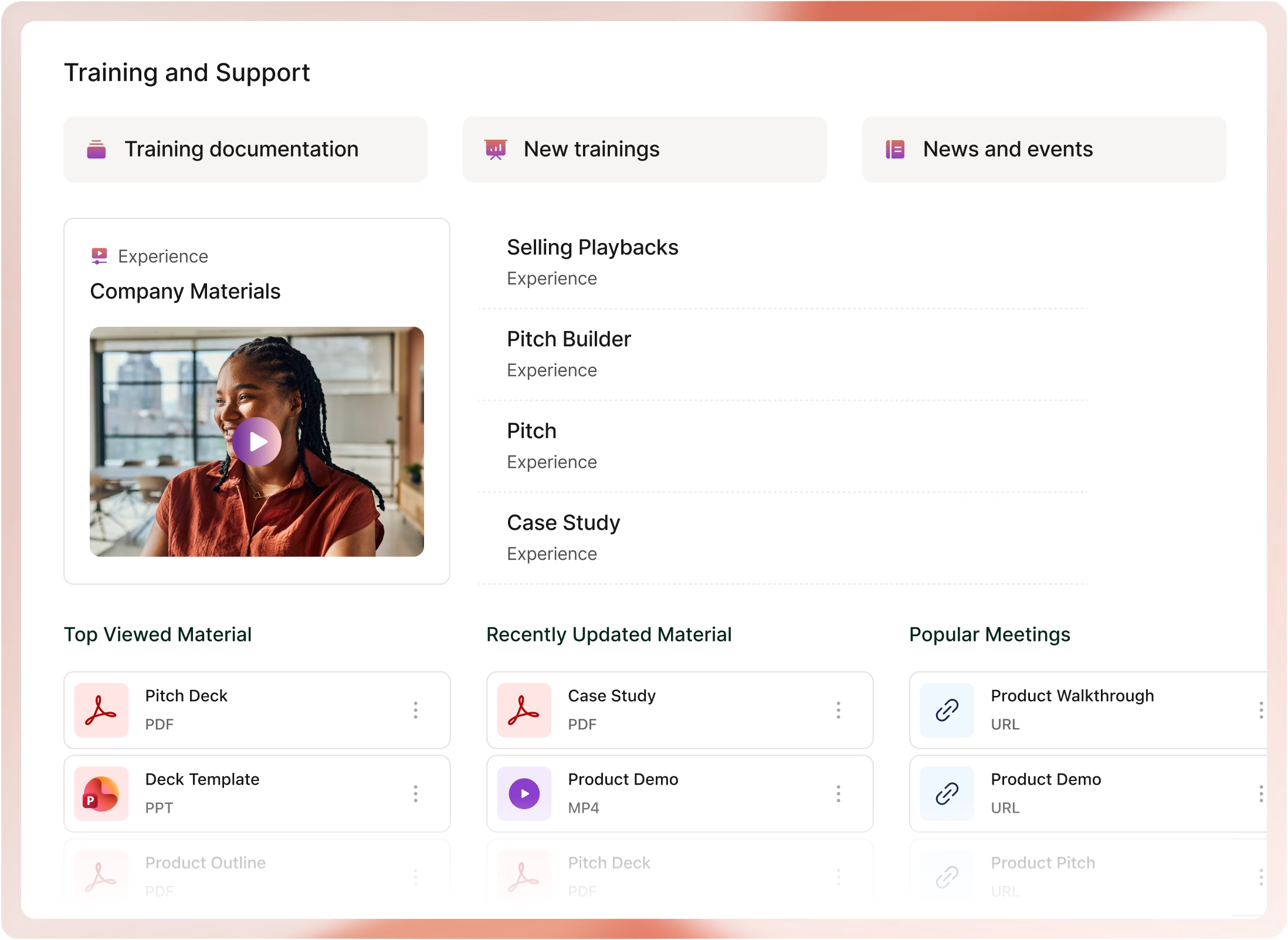
Coaching only works when it’s connected to the content and the deal. Showpad’s sales readiness capabilities live inside the same platform reps use every day — training paths link directly to the pitches, one-pagers, and demos reps present in real deals. Seismic’s coaching layer, acquired through Lessonly, sits alongside its content product. Managers and reps switch contexts to move between the two.
Where Seismic falls short (G2 reviews)
- Coaching workflows sit outside the daily selling flow
- Reps and managers switch platforms between training and content
- No native link between coaching outcomes and deal performance

Every week you wait on a rollout is a week of pipeline you're losing
Showpad customers are typically active on the platform within 4–6 weeks. Seismic enterprise deployments commonly run 3–6 months, driven by content architecture setup, custom integrations, and admin configuration overhead. Before you sign, ask both vendors for their committed go-live date — in writing.
Where Seismic falls short (G2 reviews)
- Long implementation cycles for enterprise deployments
- Heavy content architecture work required before go-live
- Admin configuration overhead that continues post-launch
Showpad vs. Seismic — what's the difference?
While both platforms offer content management, seller coaching, and analytics, Showpad is the only revenue effectiveness platform built for the field. A mobile-first architecture, native coaching, and a stable roadmap make Showpad the lower-risk, higher-performance choice for complex selling organizations.
| Features |
Showpad
|
Seismic |
|---|---|---|
| Merger acquisition risk | Stable — one platform, one team, one focus | Mid-merger with Highspot — feature audit underway |
| Rep adoption | Mobile-first, offline-first UX reps actually open |
Desktop-centric; mobile experience lags |
| Buyer engagement | Shared Spaces: persistent, collaborative deal rooms | LiveSend: content delivery with open tracking |
| Native coaching | Sales readiness built into one platform | Lessonly acquisition — coaching sits alongside, not native |
| Field Meeting AI | Captures meeting insights, updates your CRM, and drafts follow-ups instantly |
Not available |
| Implementation speed | Typically live in 4–6 weeks | Enterprise rollouts commonly 3–6 months |
| Customer success | Dedicated TAM for every account, every tier | Post-sale service gaps commonly flagged in customer reviews |
What the merger means for your team
When two platforms merge, someone decides what gets cut. It probably won't be announced on a blog post. Roadmaps get frozen. Account teams get reshuffled. Ask your Seismic rep: "Which workflows your reps rely on today are guaranteed to survive the integration?" If they can't answer, that's your answer.

Don't let someone else's merger become your problem
See what a stable, field-first alternative looks like — in 30 minutes.
What to expect:
- Find out which Seismic workflows Showpad replicates on day one
- See Field Meeting AI, collaborative deal rooms, and governed Showpad Genie in a single session
- Get a straightforward comparison of total cost — no obligation